


Contact information
LOCATIONs
Oxford Transplant Centre, Churchill Hospital, Oxford, OX3 7LE
Department of HPB Surgery, Churchill Hospital, Oxford, OX3 7LE
Oxford Centre for Diabetes, Endocrinology and Metabolism (OCDEM), Churchill Hospital, Oxford, OX3 7LE
NHSBT Blood and Transplant (NHSBT) Blood Donor Centre, John Radcliffe Hospital, Oxford, OX3 9BQ
Colleges

Research groups
Websites
-
Santersus AG
Technology company
-
OrganOx Ltd
Organ technology
-
Department of HPB Surgery
Churchill Hospital, Oxford
-
Department of Transplant Surgery
Churchill Hospital, Oxford
-
Department of HPB and Liver Transplantation
Royal Free Hospital, London
-
Abdominal Organ Transplant and HPB Fellowship
University of Toronto, Toronto General Hospital
Collaborators
-
Peter Friend
Emeritus Professor of Transplantation
-
Rutger J. Ploeg
Professor of Transplant Biology and Head of Strategy
-
Simon Knight
Associate Professor of Transplant Surgery
-
Alex Gordon-Weeks
Consultant Hepatobiliary Surgeon and Clinical Lecturer
-
Sadr Shaheed
Translational Omics Scientist
-
Letizia Lo Faro
Postdoctoral Research Scientist
-
David Nasralla
Clinical Research Fellow in Transplant Surgery and DPhil Candidate
-
Fungai Dengu
Academic Clinical Lecturer in Transplant Surgery
-
Hatem Sadik
DPhil student and Clinical Research Fellow
-
Alexander Sagar
Academic Clinical Lecturer


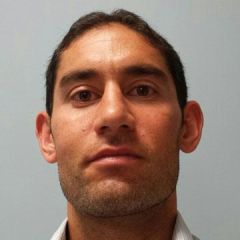


Hussain Abbas
BM, BMedSci, DPhil (Oxon), FRCS (Ed)
Academic Clinical Lecturer in HPB and Transplant Surgery
Liver disease is the third leading cause of premature death in the UK. Liver transplantation is the only successful treatment for end-stage liver disease but is limited by a shortage of suitable donor organs. In order to meet waiting list demands, there has been an increase in utilisation of organs from extended criteria donors i.e. donation after circulatory death (DCD), steatosis (fatty liver) and older age. However, these organs do not tolerate ischaemia-reperfusion injury (IRI) during the transplant procedure, making them higher-risk.
Normothermic machine perfusion (NMP) has emerged as a transformative technology in liver transplantation, maintaining donor organs in a metabolically active state through the continuous delivery of oxygenated blood and nutrients at physiological temperature. Beyond preservation, NMP provides a unique platform for organ assessment, optimisation, and therapeutic intervention prior to transplantation, creating new opportunities to safely increase the utilisation of higher-risk donor grafts.
My research focuses on developing strategies to optimise the viability and transplantability of high-risk donor livers during normothermic machine perfusion. Key areas of interest include donor liver defatting, extracorporeal removal of damage-associated molecular patterns (DAMPs) and other inflammatory mediators, controlled oxygenated rewarming and the development of next-generation functional assessment tools capable of improving graft selection and utilisation.
Through translational studies undertaken within the Oxford Transplant Research Group, we have demonstrated that targeted interventions can enhance ex-situ graft function, particularly in higher-risk donor livers, providing important mechanistic insights and a clear pathway towards clinical implementation.
As part of this translational programme, I have led the NIHR-funded multicentre DeFat Study, a prospective randomised clinical trial conducted under the supervision of Chief Investigators Professor Peter Friend and Professor Simon Knight. The study is evaluating whether ex-situ defatting therapy can improve the suitability of steatotic donor livers for transplantation by assessing graft function, transplant suitability, and post-transplant outcomes, whilst generating the evidence required to inform a future efficacy trial.
Building on these advances, our programme is now progressing towards early-phase clinical trials evaluating the integration of targeted extracorporeal therapies into machine perfusion platforms, with the ultimate aim of improving graft viability, expanding donor organ utilisation and enhancing transplant outcomes.
Background
I am an Academic Clinical Lecturer at the Nuffield Department of Surgical Sciences, University of Oxford. My work combines clinical practice in Hepatopancreatobiliary (HPB) and Transplant Surgery with a translational research programme focused on normothermic machine perfusion and strategies to increase the utilisation of extended-criteria donor organs.
I spent my formative years in Hong Kong, where I attended King George V School, before moving to the United Kingdom in 2007 to study Medicine at the University of Southampton. During my undergraduate training, I developed an early interest in academic surgery and translational research, undertaking an intercalated BMedSci degree under the supervision of Professor Tim Underwood. My research investigated the role of the PI3K/Akt signalling pathway in periostin-mediated invasion of oesophageal adenocarcinoma, providing an early foundation in laboratory science and research methodology.
Following graduation in 2012, I completed Foundation Training within the South Thames Deanery before entering Core Surgical Training in Oxford in 2014 and Higher Surgical Training in General Surgery within the Thames Valley Deanery in 2016. During this time, I developed a specialist interest in HPB surgery and transplantation, attracted by the unique integration of complex surgery, critical care, immunology and translational science.
In 2019, I undertook dedicated academic training within the Oxford Transplant Centre under the supervision of Professor Peter Friend, leading to the award of a DPhil from the University of Oxford. This period established the foundations of my ongoing academic interest in organ preservation, machine perfusion and donor organ optimisation.
Following completion of my DPhil, I returned to Higher Surgical Training whilst maintaining an active research programme through my appointment as Academic Clinical Lecturer in 2023. Alongside my academic development and specialist HPB training in Oxford, I have undertaken specialist clinical training in liver transplantation and multivisceral organ retrieval at the Royal Free Hospital, where I served as a lead retrieval surgeon. These experiences have further strengthened my commitment to advancing donor organ utilisation and improving outcomes in transplantation.
I was awarded a Certificate of Completion of Training (CCT) in General Surgery in 2026. In parallel, I was selected for the ASTS-accredited Abdominal Multi-Organ Transplant and HPB Surgery Fellowship at the University of Toronto. As one of the world's leading fellowship programmes, this fellowship provides advanced training in multivisceral abdominal transplantation and HPB surgical oncology, alongside opportunities for collaborative research in organ preservation and machine perfusion. The fellowship represents a unique opportunity to further develop my clinical and academic expertise, foster enduring collaborations and establish the foundations for a future career as an academic surgeon.
Publications
Pancreatic enzyme replacement therapy in patients with pancreatic cancer: A national prospective study. Pancreatology. 2021;21(6):1127-1134.
Abbas SH, Friend PJ. Current status of organ preservation for transplantation. Surgery in Practice and Science. 2020.
The Impact of Neoadjuvant Treatment on Survival in Patients Undergoing Pancreatoduodenectomy with Concomitant Portomesenteric Venous Resection: An International Multicenter Analysis. Annals od Surgery. 2021. doi: 10.1097/SLA.0000000000005132.
Defining Benchmark Outcomes for Pancreaticoduodenectomy with Portomesenteric Venous Resection. Annals of Surgery. 2020;272(5):731-737
Dengu F, Abbas SH, Ebeling G, Nasralla D. Normothermic Machine Perfusion (NMP) of the Liver as a Platform for Therapeutic Interventions during Ex-Vivo Liver Preservation: A Review. Journal of Clinical Medicine. 2020;9(4). pii: E1046. doi: 10.3390/jcm9041046
Abbas SH, Ghazanfar MA, Gordon-Weeks AN, Reddy SR, Soonawalla Z, Silva MA. Acalculous Cholecystitis: Is an Elective Interval Cholecystectomy Necessary? Digestive Surgery. 2017;35(2):171–6.